
As a trauma therapist, I’ve spent years guiding people through some of the most painful chapters of their lives. I’ve used a range of tools, from talk therapy to CBT, to help clients reframe their thoughts, gain insight, and build healthier coping skills. These approaches are valuable. They’re often the first step toward change.
But over time—both in my own healing and in my work with clients—I started noticing a pattern: Insight didn’t always equal healing.
Clients would understand their trauma. They could explain where it came from, name the patterns, recite affirmations, and identify triggers. But they were still stuck. Still anxious. Still reacting to things that “shouldn’t” bother them anymore.
And I knew that feeling because I had lived it, too.
That’s when I found EMDR.
Talk Therapy vs. EMDR: What’s the Difference?
Traditional talk therapy and CBT focus largely on conscious thought—your beliefs, your behaviors, the stories you tell yourself. This can be incredibly helpful for managing day-to-day challenges, reframing cognitive distortions, and understanding why you do what you do.
But trauma doesn’t always live in the thinking brain. It lives in the body. In the nervous system. In the places language can’t reach.
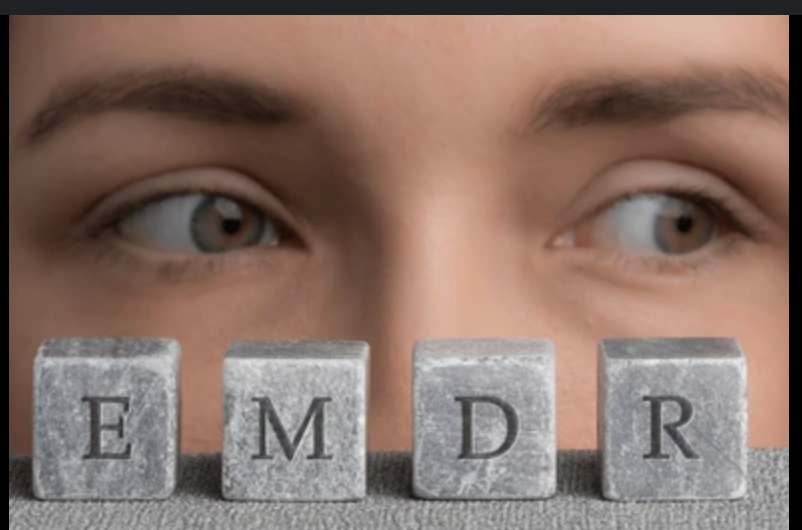
That’s where EMDR—Eye Movement Desensitization and Reprocessing—comes in.
Getting to the Root
One of the most powerful things EMDR does is bypass the part of your brain that tries to “logic” its way through pain. Instead, it accesses the emotional brain—the part responsible for storing unprocessed trauma, often stuck in time.
In EMDR, we don’t just talk about the issue, we go to the root.
The panic attacks aren’t always about the current relationship. Sometimes, they trace back to being a child who was never allowed to feel safe.
The fear of abandonment didn’t begin with your last breakup. It might have started with a parent who left, emotionally or physically, long before that.
The self-doubt you’re battling at work? It might not be about your job at all, but about the years of being told you weren’t enough.
With EMDR, we identify the earliest memory or experience connected to that core belief. Then, using bilateral stimulation: eye movements, tapping, or sound, we help the brain reprocess that memory in a way that finally feels safe and resolved.
My Own Experience
Before I ever brought EMDR into my practice, I experienced it as a client. I had done years of therapy. I could talk about my trauma, explain the dynamics, understand my nervous system, and still, something felt stuck.
During one EMDR session, a seemingly small childhood memory surfaced, something I hadn’t thought of in decades. But it carried a massive emotional weight. As we processed it, I could feel something shift in my body. A lightness. A breath I didn’t know I’d been holding.
That session didn’t erase my pain—but it changed my relationship to it. And that changed everything.
Why EMDR Can Be So Transformative
- It doesn’t rely on words. You don’t have to retell your trauma in detail if you don’t want to.
- It’s body-inclusive. It recognizes that trauma is stored physically, not just mentally.
- It’s client-led. Your brain does the work. I’m just the guide.
- It rewires, not just reframes. Instead of teaching you to cope with the pain, EMDR helps release it.
Is EMDR Right for You?
Not every client is ready to dive into EMDR immediately, and that’s okay. Sometimes we start with stabilization, building safety, and grounding tools. But when the time is right, EMDR can help clients go deeper, faster, and with a sense of true resolution.
If you’ve tried therapy and still feel like something’s unresolved, it may not be because you’re doing it “wrong.” It may just be time to approach healing from a different angle, one that honors the deeper, often hidden layers of your experience.
Final Thoughts
Healing doesn’t always happen through talking. Sometimes it happens in the quiet moments of connection, when your body finally realizes the threat is gone, when your nervous system exhales, when the memory no longer hijacks your present.
That’s what EMDR offers.
And if you’re ready—or even just curious—I’m here to walk with you.